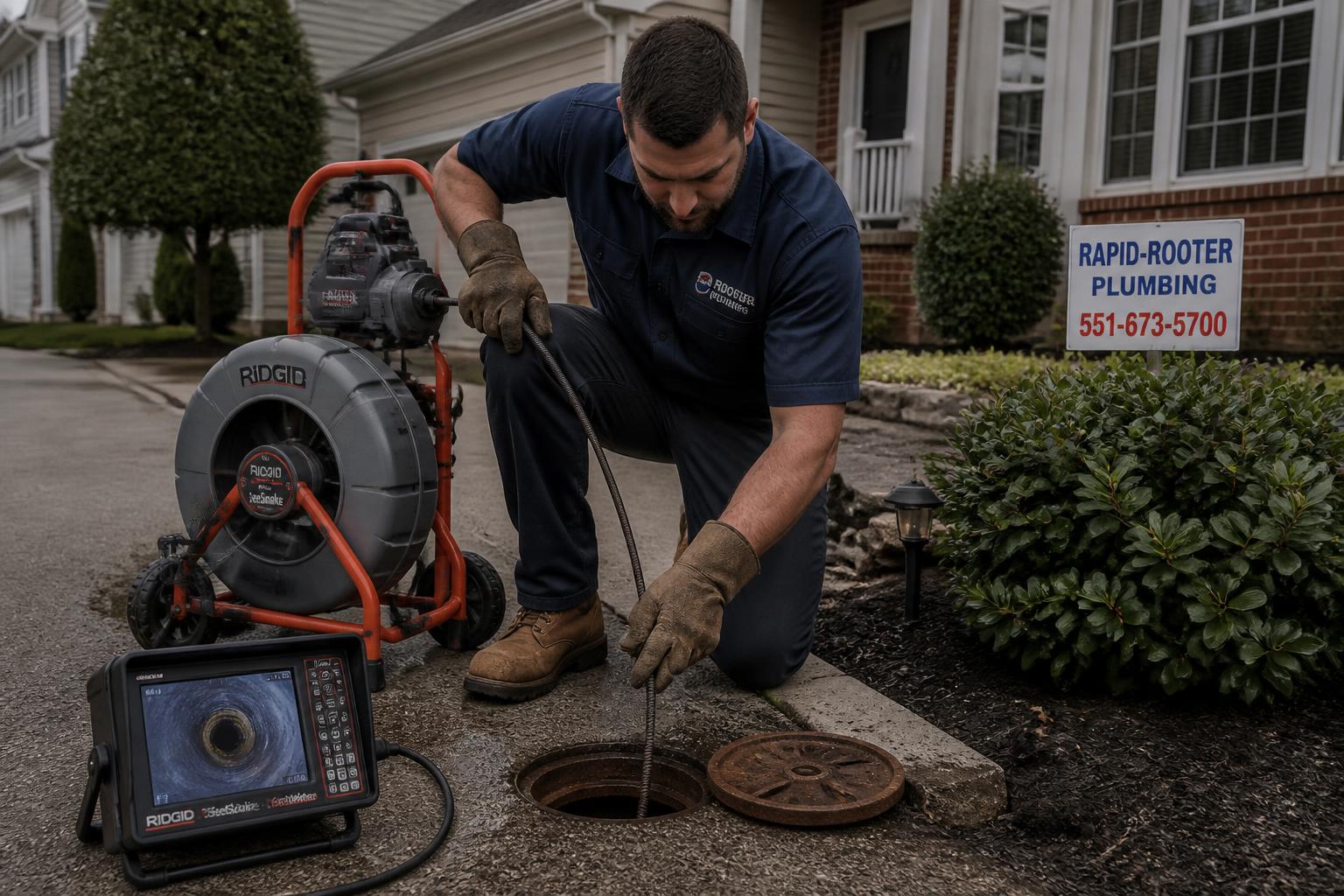
Anyone can push a cable down a drain and get water moving again. The question that matters is why it clogged, and whether it will clog again in six weeks. Every drain cleaning we perform ends with an assessment of the cause: grease accumulation, root intrusion, a bellied section holding water, scale buildup in old cast iron, or a foreign object.
We clear kitchen and bathroom drains, tubs and showers, laundry standpipes, floor drains, main sewer lines and commercial grease-laden lines. Where warranted, camera inspection turns guesswork into a documented finding you can act on.
Cabling vs Hydro Jetting
Cabling punches a hole through a blockage and is fast, effective and appropriate for most household clogs. Hydro jetting uses high-pressure water to scour the full inside diameter of the pipe, removing grease and scale that a cable passes straight through. Kitchen lines and commercial drains almost always need jetting for a lasting result — cabling a grease line simply drills a temporary channel through it.
Root Intrusion
Mature trees across our service area send roots toward the moisture and nutrients in sewer lines, entering at joints in older clay and cast iron pipe. We cut roots mechanically, camera the line to assess joint condition, and then discuss options honestly: a maintenance cutting schedule, spot repair at the affected joint, or lining and replacement when the pipe is failing.
Preventing the Next Clog
Grease belongs in the trash, not the drain, even with hot water chasing it. So-called flushable wipes are the single largest cause of main line blockages we encounter. Enzyme treatments maintain a healthy line; caustic store-bought chemicals damage pipes and create a hazard for the next person to open the drain. We give practical guidance based on what we found in your specific line.
Why choose J&J Mechanical?
- Cabling and high-pressure hydro jetting both available
- Camera inspection to identify the underlying cause
- Main line, kitchen, laundry and commercial drains
- Root cutting with a documented condition assessment
- Written findings with recommendations, not vague advice
Signs you should schedule service
- Multiple fixtures draining slowly at the same time
- Gurgling from a toilet when the tub drains
- Recurring clogs in the same fixture
- Sewage odor near drains or in the yard
Local experience in Crewe
Crewe sits just west of Blackstone along Route 460, and it is one of our busiest service towns outside of our home base. The town grew around the railroad, and much of the housing dates to that era — solid homes with plaster walls, tall ceilings and mechanical systems that were added long after the house was built.
That history creates a specific set of comfort challenges: retrofitted duct systems squeezed into closets and crawlspaces, uninsulated attic runs, undersized returns and older galvanized or copper plumbing nearing the end of its service life. We have worked on Crewe homes long enough to know what we will find before we open the crawlspace door.
Predominantly early-to-mid 20th century railroad-era homes with retrofit HVAC, plus mid-century ranches and manufactured homes on the outskirts. Polybutylene and galvanized plumbing are both common finds here.
Crewe shares Nottoway County's humid continental pattern: sticky summers that push cooling equipment hard and cold snaps that expose uninsulated crawlspace plumbing to freezing.