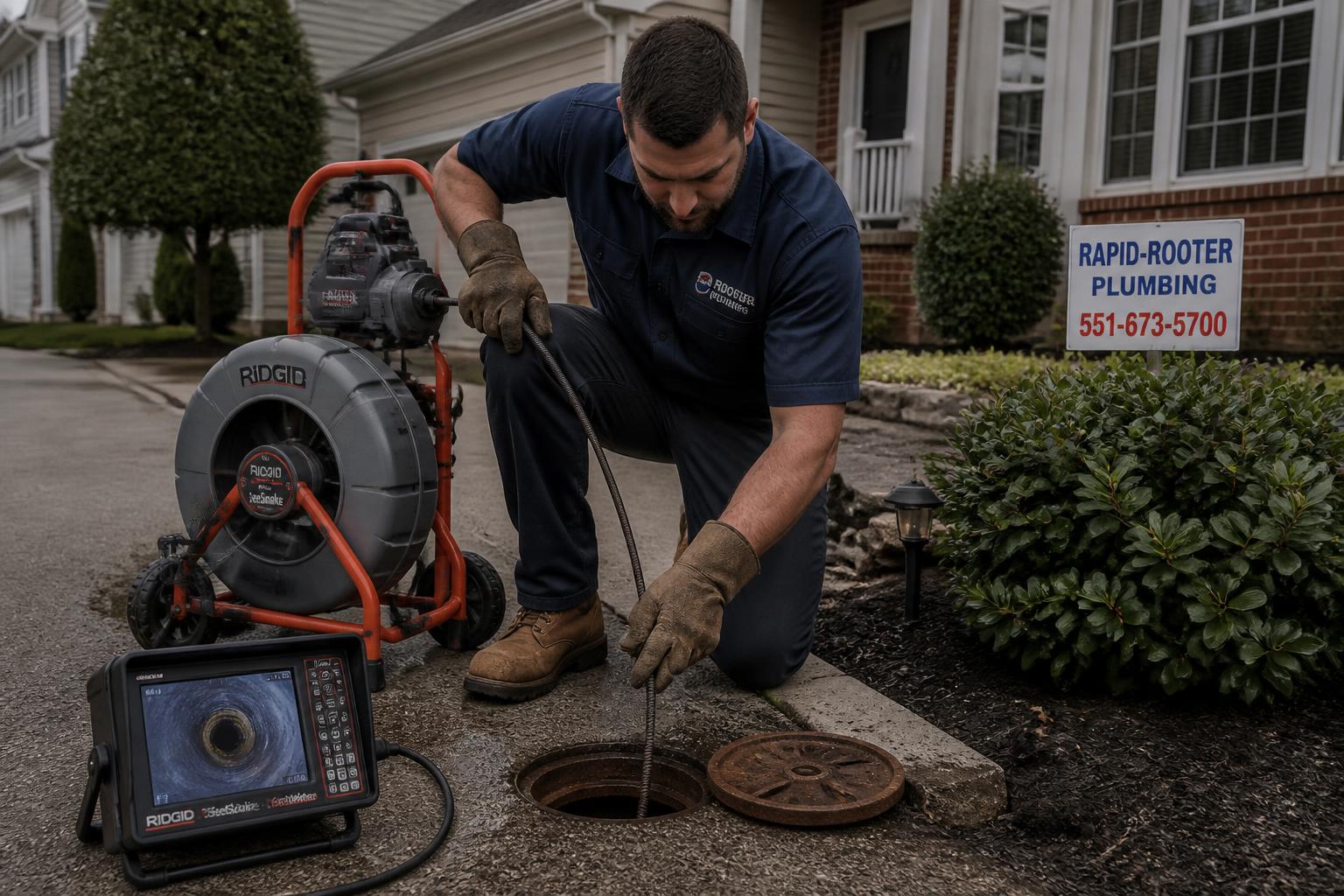
Anyone can push a cable down a drain and get water moving again. The question that matters is why it clogged, and whether it will clog again in six weeks. Every drain cleaning we perform ends with an assessment of the cause: grease accumulation, root intrusion, a bellied section holding water, scale buildup in old cast iron, or a foreign object.
We clear kitchen and bathroom drains, tubs and showers, laundry standpipes, floor drains, main sewer lines and commercial grease-laden lines. Where warranted, camera inspection turns guesswork into a documented finding you can act on.
Cabling vs Hydro Jetting
Cabling punches a hole through a blockage and is fast, effective and appropriate for most household clogs. Hydro jetting uses high-pressure water to scour the full inside diameter of the pipe, removing grease and scale that a cable passes straight through. Kitchen lines and commercial drains almost always need jetting for a lasting result — cabling a grease line simply drills a temporary channel through it.
Root Intrusion
Mature trees across our service area send roots toward the moisture and nutrients in sewer lines, entering at joints in older clay and cast iron pipe. We cut roots mechanically, camera the line to assess joint condition, and then discuss options honestly: a maintenance cutting schedule, spot repair at the affected joint, or lining and replacement when the pipe is failing.
Preventing the Next Clog
Grease belongs in the trash, not the drain, even with hot water chasing it. So-called flushable wipes are the single largest cause of main line blockages we encounter. Enzyme treatments maintain a healthy line; caustic store-bought chemicals damage pipes and create a hazard for the next person to open the drain. We give practical guidance based on what we found in your specific line.
Why choose J&J Mechanical?
- Cabling and high-pressure hydro jetting both available
- Camera inspection to identify the underlying cause
- Main line, kitchen, laundry and commercial drains
- Root cutting with a documented condition assessment
- Written findings with recommendations, not vague advice
Signs you should schedule service
- Multiple fixtures draining slowly at the same time
- Gurgling from a toilet when the tub drains
- Recurring clogs in the same fixture
- Sewage odor near drains or in the yard
Local experience in Dinwiddie
Dinwiddie County stretches east from our service area toward Petersburg, mixing rural farmland with growing residential development and commercial corridors. That growth means we work on both twenty-year-old builder-grade systems reaching end of life and brand-new construction where we are correcting installation shortcuts left by production contractors.
Dinwiddie also has a significant number of homes on wells with challenging water chemistry — iron, hardness and sediment that destroy water heaters and tankless heat exchangers when untreated. Testing water before recommending equipment is not optional here.
A mix of rural farmland properties, 1990s and 2000s subdivision construction with builder-grade equipment now aging out, and newer development along the growth corridors.
Slightly warmer and equally humid summers than our western towns, with the same freezing winter nights — and well water chemistry that materially affects water heating equipment selection.