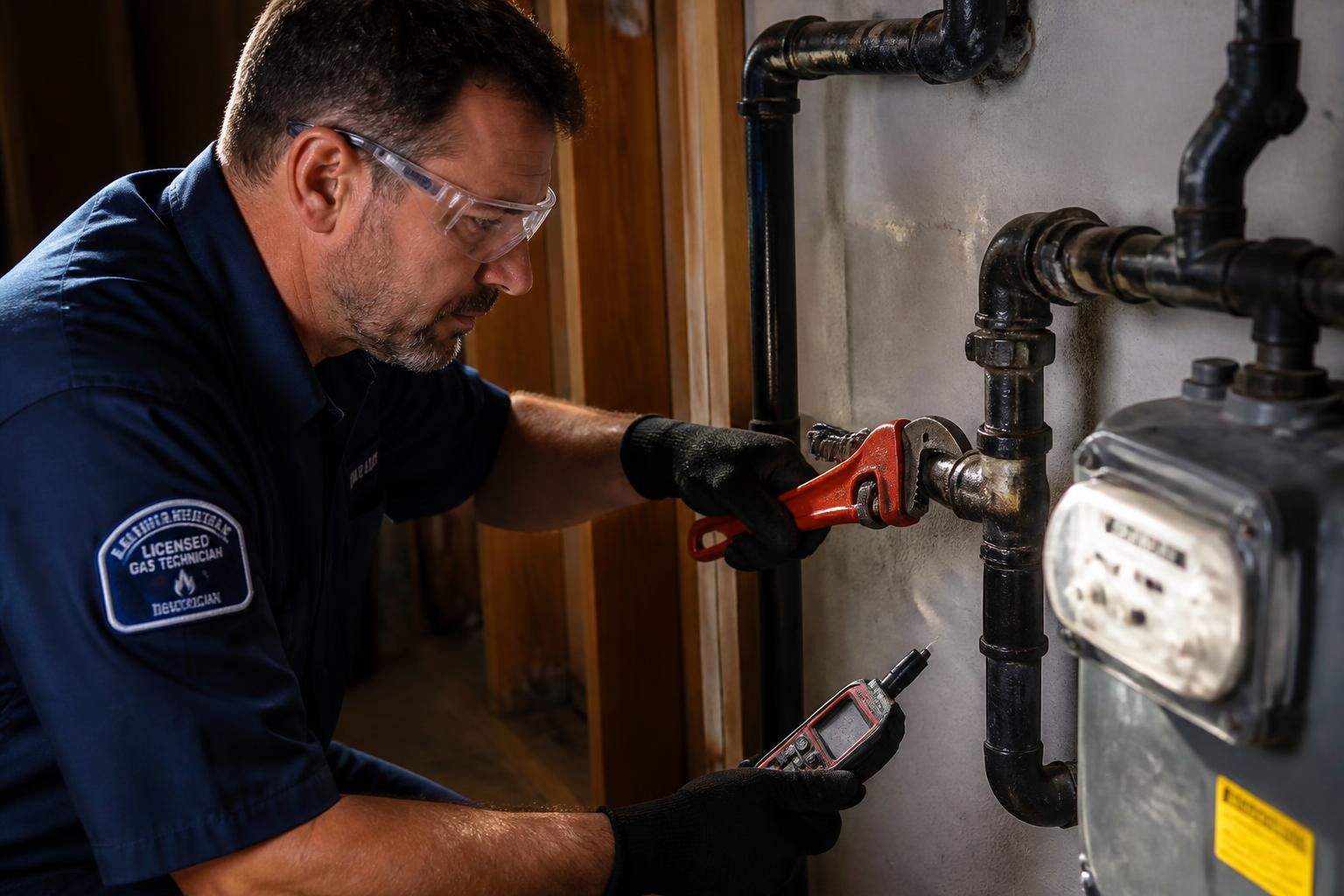
Gas line work is the least forgiving trade we perform. There is no acceptable margin of error, no partially correct installation, and no reason to use an unlicensed installer to save a few hundred dollars. Every gas line J&J Mechanical installs is sized by BTU load calculation, assembled from approved materials, pressure tested, permitted and inspected before a single appliance is connected.
We run new lines for gas ranges, dryers, water heaters, furnaces, fireplaces and log sets, outdoor grills and kitchens, pool and spa heaters, generators and shop heaters — for both natural gas and propane systems across Nottoway, Amelia, Dinwiddie and Prince Edward counties.
Load Calculation and Sizing
Gas pipe must be sized for the total connected BTU load, the distance from the meter or tank, and the number of fittings in the run. Undersized piping is the most common defect we find on existing systems: the range works fine until the furnace and water heater fire at the same time, and then everything starves. We calculate the full system load including anything you plan to add later.
Materials and Installation
Black iron pipe with approved joint compound, or CSST correctly bonded and protected per code and manufacturer instruction — improperly bonded CSST is a genuine lightning hazard and one we find in existing homes regularly. Underground runs use approved polyethylene with tracer wire and correct burial depth. Shutoffs are installed at every appliance and at accessible points in the system.
Testing, Permits and Inspection
Every new line is pressure tested and held for the duration required by code, with the gauge witnessed by the inspector. We pull the permit, coordinate the inspection, and handle the meter or tank-side connection with the utility or propane supplier. You receive the documentation, which matters at resale and for insurance.
Why choose J&J Mechanical?
- BTU load calculation including future appliance plans
- Black iron, CSST and underground PE installation
- Correct CSST bonding — a hazard we frequently find missed
- Permits pulled and inspections coordinated for you
- Documented pressure test provided on completion
Signs you should schedule service
- Adding a gas range, dryer, fireplace or generator
- Appliances underperform when several run at once
- Building an outdoor kitchen, grill or fire feature
- Converting from electric or oil to gas appliances
Local experience in Victoria
Victoria was built as a railroad town and retains that compact, walkable character with a mix of early 20th century homes, mid-century construction and rural properties on the surrounding roads. Many Victoria homes rely on propane rather than natural gas, and a large share are on private wells and septic systems.
Those two facts shape almost everything we do here. Propane appliances need correct orifice sizing and regulator setup. Well systems mean pressure tanks, filtration and water chemistry that affects water heaters and tankless equipment far more than municipal water does. We service all of it.
Railroad-era in-town homes, mid-century ranches, manufactured homes and rural properties on well and septic systems. Propane is the dominant fuel for heating and cooking appliances.
Victoria's warm humid summers and freezing winter nights make dual-season heat pump performance and freeze protection for well lines and crawlspace plumbing both essential.