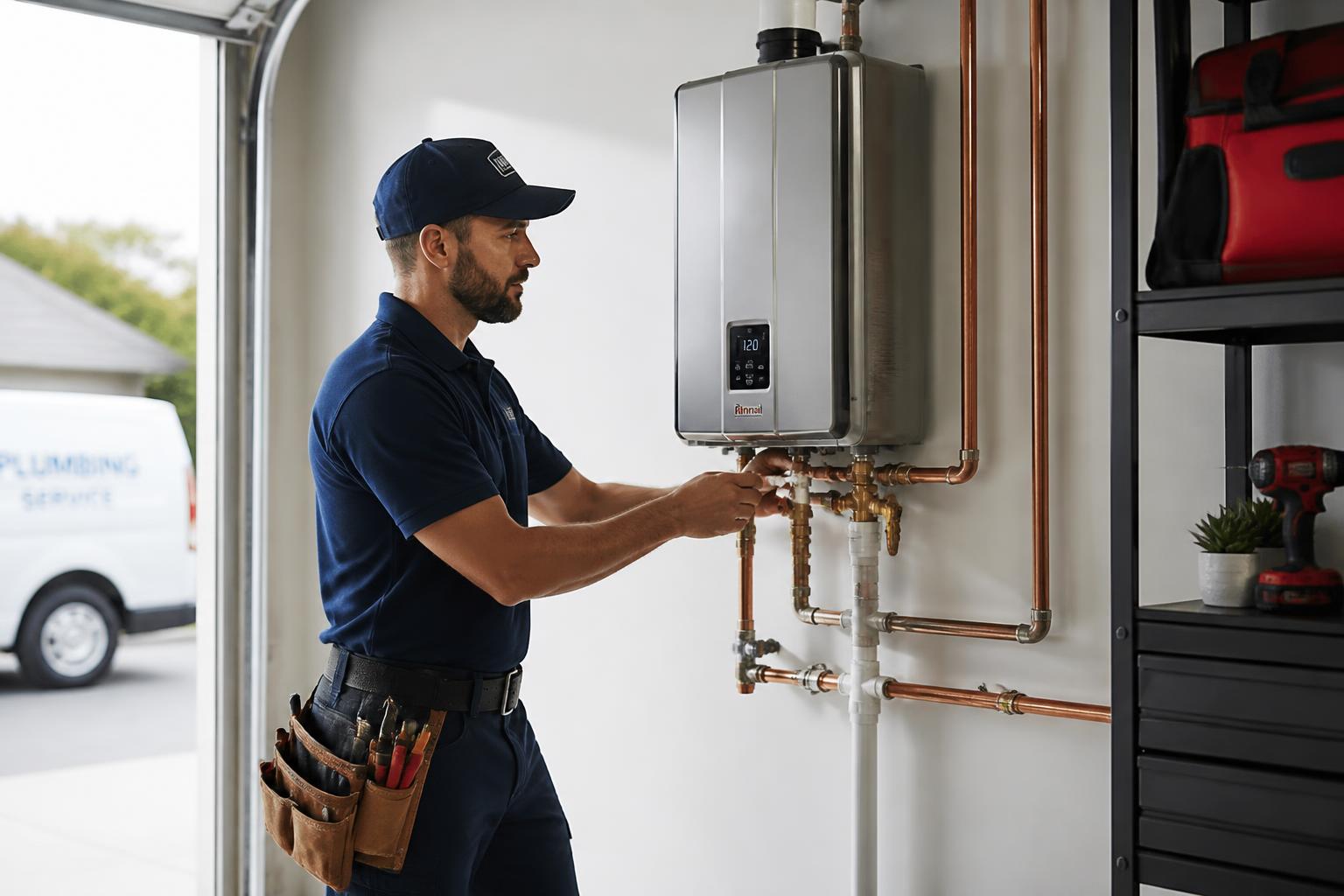
Losing hot water is disruptive, but it is not automatically a replacement. Many failures are inexpensive parts: a heating element, thermostat, thermocouple, gas control valve, or an igniter. Our first job is determining whether your heater is repairable and worth repairing, rather than defaulting to selling a new unit.
Tank age and condition drive that decision. A six-year-old tank with a failed element is worth repairing. A twelve-year-old tank with sediment scaling, a spent anode rod and rust at the fittings is on borrowed time regardless of what we replace today, and we will say so directly.
Electric Water Heater Repairs
Failed upper or lower heating elements, thermostats out of calibration, tripped high-limit ECO switches, loose or burned wiring at the terminal block, and heavy sediment insulating the lower element from the water. Symptoms map fairly reliably: no hot water at all usually points to the upper element or ECO, while running out quickly usually points to the lower element or sediment.
Gas Water Heater Repairs
Pilot assemblies and thermocouples, gas control valves, failed igniters on electronic models, blocked flue or draft hood problems, and sediment causing the rumbling and popping sounds most homeowners recognize. We always check draft and combustion on gas units, because a heater that will not stay lit is sometimes telling you the venting is compromised.
Tankless Service
Tankless units need descaling on a regular schedule, especially on well water. Common issues are scaled heat exchangers reducing output, clogged inlet filters, flame rod fouling, error codes from venting restriction, and undersized gas supply lines that cannot feed the burner at full fire. We descale, clean and correct gas sizing rather than treating error codes as a death sentence.
Why choose J&J Mechanical?
- Repair-first approach with honest end-of-life assessment
- Gas, electric, tankless and hybrid heat pump units serviced
- Same-day availability on most no-hot-water calls
- Tank flushing and anode rod service to extend life
- Temperature and pressure relief safety verified every visit
Signs you should schedule service
- No hot water or hot water that runs out unusually fast
- Rumbling, popping or banging from the tank
- Rusty or discolored hot water
- Water pooling around the base of the heater
Local experience in Crewe
Crewe sits just west of Blackstone along Route 460, and it is one of our busiest service towns outside of our home base. The town grew around the railroad, and much of the housing dates to that era — solid homes with plaster walls, tall ceilings and mechanical systems that were added long after the house was built.
That history creates a specific set of comfort challenges: retrofitted duct systems squeezed into closets and crawlspaces, uninsulated attic runs, undersized returns and older galvanized or copper plumbing nearing the end of its service life. We have worked on Crewe homes long enough to know what we will find before we open the crawlspace door.
Predominantly early-to-mid 20th century railroad-era homes with retrofit HVAC, plus mid-century ranches and manufactured homes on the outskirts. Polybutylene and galvanized plumbing are both common finds here.
Crewe shares Nottoway County's humid continental pattern: sticky summers that push cooling equipment hard and cold snaps that expose uninsulated crawlspace plumbing to freezing.